

Pursuit Of Happyness Movie Questions
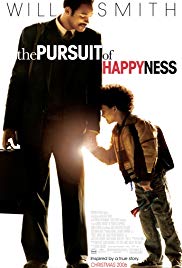
THE PURSUIT OF HAPPYNESS
SUBJECTS — U.Southward./1945 – 1991; Variety/African-American; Biography;
SOCIAL-EMOTIONAL LEARNING — Male parent/Son; Parenting; Surviving; Piece of work/Career; with the pupil handout Episodes in the Life of Chris Gardner (What'southward Non in the Motion picture) add: Alcohol & Drug Abuse; Breaking Out; Spousal Abuse; Child Corruption; Education; Appetite; Male Role Model.
MORAL-Upstanding EMPHASIS — Responsibility; Caring.
AGE : 12+; MPAA Rating — PG-thirteen for some language;
Drama; 2006; 117 minutes; Colour. Available from Amazon.com .
Give your students new perspectives on race relations, on the history of the American Revolution, and on the contribution of the Founding Fathers to the cause of representative democracy. Check out TWM'due south Guide:


Menu
Moving-picture show WORKSHEETS & STUDENT HANDOUTS
Description
In this movie, an African-American man, abandoned past his begetter equally an infant, vows that he will always be present in the life of his child. Caught in a perfect tempest of bad luck, he becomes homeless. However, he manages to accept care of his son while pursuing a highly competitive, unpaid internship as a stockbroker. The flick was "inspired by" events in the life of Christopher Gardner, who was once homeless. He is at present a wealthy stockbroker, as well as a proud begetter.
This movie is highly engaging. The story is well-written, the production values are high, and Volition Smith's acting is simply magnificent.
SELECTED AWARDS & Cast
Selected Awards:
2007 Academy Awards Nominations – Best Actor (Will Smith).
Featured Actors:
Volition Smith equally Chris Gardner, Thandie Newton as Linda, and Jaden Christopher Syre Smith as Christopher.
Director:
Gabriele Muccino.
BENEFITS OF THE Picture show
"The Pursuit of Happyness" shows a homeless African-American father taking responsibility for his child, while succeeding as a stockbroker. Information technology too has excellent messages about the importance of keeping your cool in the face of incredible thwarting and provocation. Time subsequently fourth dimension, we scout every bit the protagonist masters his emotions and comes up gracious and smiling after being dealt a serious blow. Every bit a upshot, he is oftentimes able to get dorsum to the people involved and create an opportunity for himself.
However, almost everything else nearly this movie is, in some fashion, problematic, including its messages most living out your dream and the benefits of difficult piece of work. Pointing out the issues and discussing them will lead to valuable lessons most:
(1) the liberties with the facts that tin be taken past filmmakers in a pic "inspired by a truthful story;"
(2) how the picture show makers, in search of a dramatic storyline, ignored Mr. Gardner's most important achievement, which was surviving concrete and emotional abuse by his stepfather to become a caring and nurturing human existence;
(iii) the victimization of the homeless by criminals; the homeless are at great risk of being assaulted and robbed, but this never made information technology into the moving-picture show;
(4) how movies can gloss over troubling ethical questions raised past the truthful story
During the menses that Mr. Gardner pursued the internship program his girlfriend had disappeared and taken his son; Mr. Gardner looked for them but couldn't find them; later he had passed the broker'southward test and was working equally a stockbroker, the girlfriend suddenly appeared and dropped off the boy; Mr. Gardner could have worked for another banker and earned enough coin to put a roof over his son'southward head but Mr. Gardner wanted to spend his time edifice his ain clientele because this would let him the chance to become rich faster than if he worked for someone else; working to build his own client base of operations meant that Mr. Gardner wouldn't be able to afford a place to live for a year or two; faced with a option of providing a home for his son and putting off his dream of getting rich or being homeless for nigh a yr while he tried to build his own client base, Mr. Gardner chose to subject field his son to the dangers of homelessness; in other words, he put his own interests alee of his child's safety;
and
(5) how "feel good" movies oftentimes feature Cinderella stories of boggling practiced fortune which, given the economical construction of our society, are unrealistic for all merely one in a million [in other words, what does the rags to riches story shown in this movie say to a culturally deprived black or Hispanic young person growing up in a primal city ghetto who has been socially promoted from 1 form to the next and who is non a proficient reader?].
TeachWithMovies.org has prepared an 19-page handout, Episodes in the Life of Chris Gardner (What'south Not in the Movie),which provides fascinating information on the life of Chris Gardner and the many life lessons that can exist derived from his story. It is designed as a reading exercise that will interest students. With the handout and the Discussion Questions in this Learning Guide, "The Pursuit of Happyness" can become an excellent learning experience.
POSSIBLE PROBLEMS
SUBSTANTIAL. Encounter the Benefits section to a higher place. Still, with the supplementary materials provided by this Learning Guide, each of these problems tin can be turned into a benefit.
There is a moderate corporeality of profanity in the film.
PARENTING POINTS
Later on watching the movie, suggest that you and your child "observe out what really happened" past reading TWM'due south student handout: Episodes in the Life of Chris Gardner (What's Non in the Movie) . And so talk about some interesting incidents in Mr. Gardner'due south life and go over a few of the Give-and-take Questions. Begin with Discussion Question #two
HELPFUL BACKGROUND

The True Story That Inspired the Movie
Right before he started the internship at Dean Witter, Chris Gardner'southward girlfriend disappeared and took their son with her. Mr. Gardner's efforts to find his son were fruitless. Dean Witter paid its interns $yard a month. With that money, Mr. Gardner was able to hire a room in a boarding house. Therefore, when he had to prepare for the banker'south examination, Chris Gardner had a secure place to slumber and a quiet place to study. In add-on, he didn't take to take care of a young child.
Mr. Gardner did very well on the banker'southward exam and was hired by Dean Witter. At that point, he had a selection. He could work for an established broker in the office at a salary big plenty to support himself at a reasonable level. Any prospective clients developed with his telephone calls would be referred to his employer. Perhaps Mr. Gardner would be allowed to take over a few small deals. Working for an established broker would give him more than money right away, but he would accept to put off building his own set of clients. The alternative was for Mr. Gardner to work on his own from the outset, using the telephone to build his concern. This would requite him less money for the first twelvemonth or two (merely about $1200 a month). Even so, if things went well, in a twelvemonth or 2, or three, he would brand more coin from his own fix of clients than he would have made had he started out working for an established broker. In addition, if Mr. Gardner tried to build his own set of clients from nothing, his success would depend entirely on his own efforts. Mr. Gardner chose to work on his own and make very lilliputian money right away with the hope of making a lot more than money in a few years.
Ane Fri night, several weeks afterward Mr. Gardner had started working as a broker trying to build up his own business, his former girlfriend appeared at the boarding house. She was tired of beingness a single female parent. (She had trained to be a dentist and was trying to get established in that field.) She gave Mr. Gardner their 19-calendar month-old son (Little Chris), the child'southward stroller, a very large duffle handbag filled with the child's possessions, and lots of disposable diapers. The former girlfriend told Mr. Gardner what Niggling Chris ate, that he was to have no sweets, and then she left. The boarding business firm didn't let children. Mr. Gardner and his son were now homeless. Chris Gardner had no one he could phone call and enquire for money. Nor did he experience that he could inquire his friends for a place to stay with a 19-month-erstwhile child.
Over the weekend, Mr. Gardner found 24-hour interval care for his son ($400 a month) and they lived in a $25-a-night motel. $400 a month for daycare and $750 a month for a motel would consume upward virtually all of his $1200 a month income. There'd exist no coin for food, diapers, or anything else. The only way for Mr. Gardner to afford a identify to live was to showtime working for another broker. He'd take to postpone his plan to focus on developing his own grouping of clients.
Over the next several days Mr. Gardner made a fateful decision: he and his son would be homeless for the adjacent twelvemonth or and then until his ain business at Dean Witter gave him enough coin to rent an flat. He would not work for someone else to put a roof over his son's head. (Since landlords unremarkably require hefty security deposits and first and last months rent, this meant that Mr. Gardner would have hundreds of dollars in savings while he and his son were withal homeless.) Mr. Gardner made a conscious decision that he would not postpone his gamble to get rich in order to care for his son, nor would he carelessness his child. As a result, Mr. Gardner and Little Chris were homeless for approximately one year.
What does a two-twelvemonth-old child demand? He needs at least 1 parent, food, dry diapers, safety, and stability. Rich or poor doesn't mean anything to a toddler, if he has these nuts. Being homeless is a risky proposition. Homeless people are more likely to exist assaulted and killed than people sleeping at home in their beds. Homeless people are exposed to the elements and tin can go sick. Perhaps the worst thing that could have happened to Fiddling Chris was for his begetter to have been seriously injured in an assault or killed. Being a parent means putting your child's interests before your own, especially when issues of safety are concerned. In deciding to be homeless rather than pursuing the slower track to success that would have provided him with enough money to put a roof over his son'southward head, Chris Gardner violated one of the basic obligations that a parent owes to his or her kid. Fortunately, he was able to arrive piece of work and, apparently, Little Chris suffered no harm as a result.
HOMELESSNESS IN AMERICA: THE FACTS, THE CAUSES, A Telephone call TO ACTION
According to the U.S. Section of Housing and Urban Evolution (HUD) and the National Coalition for the Homeless (NCH):
- 754,000 people were homeless on an boilerplate day in the U.S. in 2005. (This was less than .iii % of the U.S. population.) Just about 55% could find a place in a shelter. The rest, almost 335,000 people, were on the streets. One-third of the unsheltered homeless (approximately 112,000 people) were persons in families. Most of these were children.
- 47% of all homeless people are men and 59% are minorities.
- 39% are children younger than eighteen; 42% of these children are under the age of five.
- 40% are veterans.
There is a cadre of chronic homelessness, simply there is also a big turnover of people who are homeless for several months and who are and so able to find homes. Primal cities accept more than homeless people than rural/suburban areas, possibly considering there are more shelters in cities and housing is more than affordable in rural/suburban areas. (HUD Feb 2007 Annual Homeless Cess Study to Congress (HUD AHAR) pages iii, iv, 6, 21 – 24 & 32 and NCH: Who is Homeless? Fact Sheet #3 folio 2 & three.)
The homeless are convenient targets for criminals and are victimized more frequently than the general population. In 1 written report in California, 66% of homeless people interviewed reported that they had been the victim of a crime within the last year. 75% of those crimes were assaults or robberies. (Attorney General, Country of California, Special Report to the California Legislature on Crimes Committed Against Homeless Persons p. five. Data is from 2001.) The homeless who are not sheltered are at risk for becoming ill due to exposure to the elements.
WHO BECOMES HOMELESS AND WHY?
Poverty:
Poverty is the most of import risk factor for homelessness. Without the ways to pay for the about bones of necessities, poor people begin to live paycheck-to-paycheck with no way to accumulate any savings. "Being poor means being an illness, an blow or a paycheck away from living on the streets," writes the NCH. But poverty isn't simply nearly non having coin – information technology'southward virtually the underlying causes that push button people into poverty: unemployment, lack of education and training, low-paying jobs, inadequate public assistance, and lack of health insurance. NCH: Why Are People Homeless? Fact Sheet #1 pp. 1, iii, & 6.
A person's rent should typically cost about thirty% of his or her earnings (leaving money for food, clothing, instruction, and other necessities); yet, "in every state, more than [thirty% of earnings at] the minimum wage is required to afford a one or 2-bedchamber apartment." And then where do minimum-wage earners with families live? All too oftentimes they are forced into homeless shelters or they live on the streets. In some cities, anywhere from 13% to 26% of people in "homeless situations" are employed. Ibid p. 2.
Welfare has been steadily declining. Female-headed families and working families that exit the welfare organisation are at the highest risk for homelessness of any group. The NCH states, "Although more than families are moving from welfare to work, many of them are faring poorly due to low wages and inadequate work support." NCH: Why Are People Homeless? Fact Sheet #1 page 3.
Domestic violence:
Battered women and victims of domestic corruption oftentimes face up dour options: stay in an calumniating human relationship or become homeless. In fact, l% of all women and children who are homeless have fled domestic violence. Ibid page six.
Mental disease:
16% of the adult homeless suffer from mental illness. Id. page 6.
Booze and Drug Abuse:
Booze corruption is a problem for many of the homeless.
Condition as a Veteran:
Veterans are very highly represented amidst the homeless.
Considering there are several unlike causes of homelessness, there isn't one over-arching program that will help all of them. The NCH believes that relief volition come from "a concerted effort to ensure jobs that pay a living wage, adequate support for those who cannot piece of work, affordable housing, and access to health intendance." NCH: Why Are People Homeless? Fact Sheet #ane page 7.
WHAT WE Can Exercise TO Aid HOMELESS PEOPLE
Regardless of our age, income, or talents, we can help the homeless. We could volunteer at a shelter like Glide Memorial or at a food banking company or some other agency that helps homeless people. Most likely in that location's ane not too far away. Those who desire to be more active can organize a food drive at school or work with a local shelter or soup kitchen to arrange for days when students can come and volunteer. Our imaginations and our willingness to help are the only limits on what we can practise. For more than ideas and suggestions see NCH Fact Canvas #xix: How Yous Can Help End Homelessness .
Conclusion
"The Pursuit of Happyness" tells united states that homelessness isn't a trouble for "other" people; it's a trouble for "real" people. Information technology'south of import to remember The Golden Rule: treat others as y'all would like to be treated. What if yous or members of your family were without a place to slumber and there was no one to assist you?
Having a large homeless population is not inevitable. Past working together, learning about the causes of homelessness, and thinking creatively, we can provide housing for all of our people.
Give-and-take QUESTIONS
ane. See Questions Suitable for Any Film .
MEDIA LITERACY
2. There is something not quite realistic about what'south shown in the movie. What is it?
Suggested Response:
Only a superman could:
-
- study for a difficult brokers' exam and
- work in the Dean Witter role making hundreds of cold calls a twenty-four hour period and
- do better than all the other interns and
- treat his son and
- get food for them both and
- search for a unlike place to slumber every dark and
- look fresh and well rested every morning time like any other businessman and
- sell a few bone density scanners on the weekends,
- when he wasn't getting paid and knew that only 1 intern would be offered a job.
In fact, what the real Chris Gardner did was very difficult. However, it becomes a superhuman task when you add the pressure of preparing for a very difficult exam with no placidity place to study, having to sell bone density scanners on the weekends, and working for no money, all the while knowing that there was footling chance that he'd get the chore.
3. Mr. Gardner deserves praise for his conclusion to go along his son with him. However, the story told by the movie avoids dealing with the ideals of the decision made past Mr. Gardner to try to become wealthy equally fast as he could even though it meant subjecting himself and his son to the very real risks involved in beingness homeless. Little Chris was definitely a stakeholder in his father'due south conclusion. What does his father's decision to get homeless await like from Little Chris' point of view?
Suggested Response:
What does a two-year-former child need? He needs at least one parent, nutrient, dry diapers, safety, and stability. Rich or poor doesn't mean anything to a toddler if he has these basics. Beingness homeless is a risky proposition. Homeless people are more likely to be assaulted and killed than people sleeping at abode in their beds. Homeless people are exposed to the elements and can become ill. Mayhap the worst affair that could have happened to Little Chris was for his father to have been seriously injured in an assault or killed. Beingness a parent ways putting your child's interests before your own, especially when bug of safety are concerned. In deciding to be homeless rather than pursuing the slower track to success that would accept provided him with enough money to put a roof over his son'due south caput, Chris Gardner violated a basic principle of adept parenting.
The fact that Mr. Gardner's gamble paid off and that neither he nor his child were assaulted while they were homeless doesn't mean that Mr. Gardner made the right conclusion. It only means that he and his son were lucky.
4. Why did the screenwriters change the story?
Suggested Response:
At that place is no one right answer to this question. A strong reply will mention that the story told by the film is more dramatic than the truthful story. It'southward much harder to dramatize Mr. Gardner's decision to GO THE OTHER WAY, as he put it:
Not only was I going to make sure my children had a daddy, I was never going to exist Freddie Triplett. I was never going to terrorize, threaten, harm, or abuse a woman or a kid, and I was never going to drink and then hard that I couldn't business relationship for my actions.
Also, the story of Mr. Gardner's rape when he was fourteen years sometime, was probably too upsetting for a PG-thirteen flick.
5. I critic of this movie said that "The Pursuit of Happyness" and films similar it, ". . . assuage the guilt of the privileged . . . and ship the message that we who accept 'made information technology' into the middle and upper classes are there just because of our superior virtue and intelligence. It is far more flattering to aspect our wealth to superior character and abilities, . . . than to gene in inequitable tax codes, unequal access to wellness care, discriminatory education, slave-wages, international trade agreements and inheritance laws that protect privileged races and classes." The Stories We Tell: films like 'Pursuit of Happyness' assuage the guilt of the privileged past Jeremy V. Cruz, America, April xxx, 2007. Do you agree or disagree?
Suggested Response:
This is clearly a valid criticism. The vast majority of the poor work hard and show up for menial jobs day later day. Mr. Cruz, who is a onetime youth minister, said, "In fact, the poor are amongst the hardest-working, strongest, nigh selfless people I know, frequently holding ii or three jobs to continue their families together for one more day." It isn't easy to get advanced pedagogy and training when there is no money to pay for it and while you are responsible for raising children or making a living. On the other paw, virtue and effort are of import. Without them no one would accelerate. A proficient practise when discussing this question is to take an example of a person who is successful and clarify their career in terms of the advantages that they received because of their birth.
For other questions relating to media literacy, see Homelessness, Question #s i & 2.
HOMELESSNESS
1. Is it true that most people who live in poverty don't work difficult and don't apply themselves?
Suggested Response:
We don't think so. See quote from Mr. Jeremy 5. Cruz in the suggested answer to Discussion Question #five. Wait around at people who are working menial jobs. Most work pretty hard and many work 2 jobs. They have to in order to make ends come across. Why do they work in these low paying jobs and why can't they get a better job? There are many possible reasons: lack of educational activity, inadequate training, the fact that they are immigrants and can't speak English well, lack of power to do other jobs. Laziness and lack of effort aren't among them. These are respectable jobs and need to exist done. The one thing we know is that the fact that people are working these jobs ways that they are willing to exercise what information technology takes to keep their families together.
2. How is the version of homelessness in the movie different than what the homeless really experience?
Suggested Response:
The homeless are at greater adventure for being assaulted or robbed than the general population. They are at risk of becoming ill from exposure. Nor does the movie testify what happens when a homeless person has to go to the bathroom, simply at that place are no available facilities. Nor does it bear witness what happens when they are sick.
three. At that place are some adult countries in which at that place are fewer homeless people than in the U.S. Why are there then many homeless people in the U.S.?
Suggested Response:
It's a matter of priorities. In the U.S., voters would rather have lower taxes than take intendance of the homeless. Other developed countries take made different choices and have fewer extremely wealthy people and fewer people in extreme poverty or who are homeless.
4. Has this movie inverse your view of the homeless? If and then, what are the changes? If not, why not?
Suggested Response:
There is no one right response.
Short Quiz on Homelessness:
1. In 2005, approximately how many people were homeless in the U.S., both sheltered and unsheltered?
Suggested Response:
754,000 people.
2. On an average dark in 2005, what pct of the homeless were not able to find a place to sleep in a shelter?
Suggested Response:
45% or 339,000.
3. What pct and approximate number of homeless people in the U.Southward. were children under the age of 18 in 2005? Of that number, how many are under the age of v?
Suggested Response:
Approximately 39%, or 290,000 were children younger than 18; 42% or 122,000 were under the age of five.
4. What are the primary risks of being homeless?
Suggested Response:
Condign the victim of a robbery or assault and getting ill from exposure to the elements.
5. What is the role played by the high price of health intendance and lack of acceptable health insurance in forcing people into homelessness?
Suggested Response:
People whose finances are wiped out by the costs of illness are at swell risk of losing their homes.
6. How much should a family spend on housing if they are to have plenty money left over for food, clothing, pedagogy, and other necessities?
Suggested Response:
thirty%.
The answer to the post-obit question counts for four points.
7. List the 5 dissimilar types of people who are at run a risk for becoming homeless.
Suggested Response:
(1) the poor;
(2) the mentally sick;
(iii) the alcoholic and drug-addicted;
(4) victims of domestic violence; and
(5) veterans.
SOCIAL-EMOTIONAL LEARNING
1. Ane critic wrote,
Often, as I watched the motion-picture show and the Chris Gardner character was frustrated time and fourth dimension again, similar when he got the parking ticket for his supervisor's machine, or when he couldn't sell a bone density scanner, or when the man at the football game game said that Chris was too inexperienced to get his pension fund business concern, I idea the grapheme would explode. (I would have had problem keeping my cool in those situations.) The role player immune you to see the character mastering his frustration and anger to respond to the disappointment in a smiling and gracious fashion. He kept his cool and didn't burn his bridges.
Just in that location were times when the grapheme of Mr. Gardner, as shown in the picture, did lose his cool and got aggressive with people. What practice you think about the ability of this character to go on his cool and be gracious in the face of extreme disappointment and frustration? When did he express his frustration and get aroused with people? Does this tell you anything about people in full general? But there were times when the character of Mr. Gardner, every bit shown in the movie, did lose his cool and got aggressive with people. What practise you recollect almost the ability of this character to keep his cool and be gracious in the face up of extreme disappointment and frustration? When did he express his frustration and become angry with people? Does this tell you annihilation about people in general?
Suggested Response:
There are a couple of good responses. Taking frustration graciously and not burning your bridges is a necessary power in being a salesperson and in life in general. It tells us that people who are oftentimes disappointed, poor people in item, have to practise a lot of self-command throughout their lives. It likewise shows that the character of Mr. Gardner expressed acrimony and became ambitious at those who were equal to him or lower in the power structure. He more often than not allowed himself to lose his cool and become ambitious with poor and not-white people. This probably has nothing to do with the real Mr. Gardner, and how he acts, only it does band true every bit something that people do.
two. At present that you accept read about Mr. Gardner's life, what practise you think is the almost remarkable thing that he accomplished? Do you remember it was caring for his son and succeeding at being a stockbroker while he was homeless? Or was it something else?
Suggested Response:
In that location is no 1 right respond. Possible responses include: (one) caring for his son and succeeding at being a stockbroker while he was homeless; (2) consciously deciding to go "the other way," i.e., not to be a child abuser like his stepfather; not to be a drunk like his stepfather; not to be a married woman beater similar his stepfather; and not to carelessness his child, like his biological begetter; (3) surviving the rape with apparently very few scars; (4) keeping J.R., the racist, equally a customer; or (5) trying to excel in whatever job that he held.
3. What did you learn from reading nearly Mr. Gardner?
Suggested Response:
There is no i answer. See the response to the preceding question.
four. Why is Chris Gardner glad that he didn't kill Freddie Triplett, his abusive step-father?
Suggested Response:
There are two reasons. Offset, he probably would have been caught and sent to jail. (Remember, equally a teenager when Chris did something illegal, he would usually become caught.) Second, killing some other person, even with justification, does terrible things to the killer.
FATHER/SON — PARENTING
See Media Literacy Question #iii.
5. What did Chris Gardner's mother contribute to his graphic symbol?
Suggested Response:
The most important matter was that he felt loved by her. In addition, there was the encouragement that he could do anything he set up his mind to and be annihilation he wanted to be. She gave him applied advice, like looking confident even when he was terrified and she told him about the value of libraries. She encouraged his reading and schoolwork which, as it turned out, was very important to his success. He could never take passed the brokers' exam if he hadn't been a proficient reader.
SURVIVING
See Media Literacy Question #three.
6. What are some of the risks of homelessness?
Suggested Response:
Homeless people often slumber in areas that are non secure and that are not protected from the weather. They are at increased risk of being assaulted or robbed and of becoming ill due to exposure to the elements.
WORK/CAREER
See Media Literacy Question #two and Media Literacy Question #five.
7. What was Chris Gardner'southward attitude toward work?
Suggested Response:
Whenever he had a job he would do his best and ask question later question. He would find the person who was the best at that job and learn what made that person a success.
8. Does Mr. Gardner's story mean that anybody can become wealthy and that if y'all don't, you're a failure? Should everyone become rich?
Suggested Response:
The truth is that just a very minor percentage of people in guild tin can become wealthy. The fact is that what nigh people desire is not to go rich only to accept a happy life. Mr. Gardner's view of this is contained in the final quote in the handout Episodes in the Life of Chris Gardner (What'southward Non in the Motion picture).
Booze & DRUG ABUSE
9. What was the office of alcohol corruption in Freddie Triplett'southward life?
Suggested Response:
According to his stepson, Mr. Triplett was an alcoholic, and when he was drunkard he would terrorize and beat his wife and children.
10. Doctors and psychologists tell u.s. that alcoholism is a family illness. Apply that to Mr. Triplett's family.
Suggested Response:
Everyone in Mr. Triplett's family unit suffered from his lack of control when he got drunk. Often, we can meet members of a family developing neurotic behaviors to deal with the alcoholic and his or her illness. We don't know enough about Mr. Triplett'southward family to talk near that. We practice know that they lived lives in fright and they were beaten. There had to exist some residual effects from this. Mr. Gardner, due to his ain strong character and his female parent's honey and influence, was able to escape almost of information technology.
BREAKING OUT
eleven. An admirable thing near Mr. Gardner was that he consciously decided that he would not continue the wheel of neglect, booze corruption, and violence to which he was subjected as a child. He calls this "going the other way" from the paths taken by his father and his stepfather. Do you lot know anyone who has done something similar? Tin can you tell u.s. his or her story?
Suggested Response:
At that place is no ane correct response.
12. Some other admirable thing about Mr. Gardner's life story is that he did something positive in his life that no 1 expected him to do. Exercise you know anyone who has done this? Tin you tell us their story?
Suggested Response:
At that place is no ane right response.
SPOUSAL Abuse/Child ABUSE
13. Draw the usual bike of a wife beater and how Triplett'southward treatment of young Chris was dissimilar.
Suggested Response:
The normal cycle for a wife beater has 3 parts. At that place is a period in which tension mounts, then the attack, and so remorse. The wife beater volition promise that it won't happen again, and he will be on good behavior for a while. But during the period of good beliefs the tension mounts once again and and so the pattern repeats itself. With Chris, Freddie Triplett was verbally calumniating all the time, taunting Chris with, "I'm not your daddy. You lot ain't got no daddy!"
xiv. Why practice you think Chris' female parent stayed with Triplett?
Suggested Response:
Most battered women stay in abusive relationships due to a mixture of fear, lack of self-esteem, and a feeling of consummate helplessness. In add-on, Chris idea that Triplett was responsible for his mother going to jail both times. The first fourth dimension was when she tried to go out Triplett and the second was when she tried to impale him. If this is true, Chris' mother knew that when she tried to get abroad from Freddie Triplett or strike dorsum at him, he would detect a way to transport her to jail. Also, she could not support her children on a maid'south salary. She needed Triplett's paycheck to feed the kids. (Compare her cocky-sacrifice to Mr. Gardner's refusal to sacrifice his own want to get rich quick to keep his son from homelessness. At that place are differences. He had a real possibility of finding a fashion out, while his mother didn't.)
Pedagogy
xv. What is the function of education in this story?
Suggested Response:
If Mr. Gardner had not gotten a good education and had not been encouraged past his mother and teachers to read, he would not have been able to laissez passer the broker'southward exam.
Ambition/Male Part MODEL
16. Do you consider Mr. Gardner to be a male role model? Tell us your reasons, pro and con.
Suggested Response:
In that location is no one correct answer, but a good answer will mention: 1) his decision to "go the other fashion" and not to fail his children (every bit his father had done) and not trounce women and children in an alcoholic rage (equally his stepfather had washed); 2) the ethical bug with his decision to subject his son to homelessness then that he could get rich faster (see Media Literacy Question #3); and 3) his decision to excel in whatever job that he held.
17. Mr. Gardner was ambitious, but was he besides ambitious?
Suggested Response:
This is another way to raise the upstanding consequence involved in Mr. Gardner's decision that his son would be homeless for many months so that Mr. Gardner could become rich faster. See Media Literacy Question #3.
MORAL-ETHICAL Emphasis (CHARACTER COUNTS)
Discussion Questions Relating to Ethical Issues will facilitate the use of this film to teach ethical principles and critical viewing.
Responsibleness
(Do what yous are supposed to do; Persevere: keep on trying!; Always practice your all-time; Utilize cocky-control; Exist self-disciplined; Think before you human activity — consider the consequences; Be accountable for your choices)
Meet Media Literacy Question #3.
CARING
(Be kind; Be compassionate and bear witness y'all care; Express gratitude; Forgive others; Aid people in need)
1. What was Mr. Gardner'southward greatest gift to his son?
Suggested Response:
His constant and consistent love and caring.
Come across also SEL Question #5.
ASSIGNMENTS, PROJECTS & ACTIVITIES
- Take students read The Stories Nosotros Tell: films like 'Pursuit of Happyness' assuage the guilt of the privileged by Jeremy V. Cruz, America, April 30, 2007, and write an essay commenting on the points made by Mr. Cruz; this is reprinted past permission of Mr. Cruz and America magazine;
- Have students inquiry and write an essay on ane of the post-obit discussion questions: Media Literacy #south iii & 5, and SEL #southward 1, 2, 8, 16 & 17;
- Have students research and write an essay on the accuracy of the presentation of homelessness in the picture;
- Have students research and write an essay on the effects of homelessness on children;
- Accept students research and write an essay on the solutions to the problem of homelessness in the U.South.;
- Have students research and write an essay on why women remain in abusive relationships; and
Run across besides Assignments, Projects, and Activities Suitable for Whatever Motion-picture show .
BRIDGES TO READING
Mr. Gardner'south autobiography, The Pursuit of Happyness written with Quincy Troupe, is a great read. It is uplifting and full of life lessons. Even so, the volume contains a few descriptions of Mr. Gardner's sex life and two or three references to drug use. It also has some profanity. Some parents will find these references offensive. (The sexual practice and drugs take been omitted from the handout, Episodes in the Life of Chris Gardner (What'due south Not in the Movie) . Parents considering recommending the volume to their children should read it themselves before giving it to their children to make sure that it's suitable. You'll probably enjoy information technology thoroughly.
LINKS TO THE INTERNET
BIBLIOGRAPHY
This Learning Guide was terminal updated on Oct 18, 2015.
LEARNING GUIDE Bill of fare:
Motion picture WORKSHEETS:

RANDALL KENNEDY, Professor, Harvard Police force School on the ii culling traditions relating to racism in America:
"I say that the all-time style to address this issue is to address it forthrightly, and straightforwardly, and embrace the complicated history and the complicated presence of America. On the i hand, that's right, slavery, and segregation, and racism, and white supremacy is securely entrenched in America. At the same fourth dimension, there has been a tremendous alternative tradition, a tradition against slavery, a tradition against segregation, a tradition against racism.
I mean, after all in the by 25 years, the United states of america of America has seen an African-American presence. Every bit nosotros speak, there is an African-American vice president. Every bit we speak, in that location'south an African- American who is in charge of the Department of Defence force. And so nosotros have a complicated state of affairs. And I think the all-time mode of addressing our race question is to merely exist straightforward, and be clear, and embrace the tensions, the contradictions, the complexities of race in American life. I think we need actually a new vocabulary.
So many of the terms we use, nosotros use these terms over and over, starting with racism, structural racism, disquisitional race theory. These words actually accept been weaponized. They are vehicles for propaganda. I think we would exist better off if we were more physical, we talked about existent issues, and we actually used a language that got us abroad from these overused terms that actually don't hateful that much. From Fahreed Zakaria, Global Public Square, CNN, December 26, 2021
Give your students new perspectives on race relations, on the history of the American Revolution, and on the contribution of the Founding Fathers to the crusade of representative democracy. Check out TWM's Guide: TWO CONTRASTING TRADITIONS RELATING TO RACISM IN AMERICA and a Tragic Irony of the American Revolution: the Cede of Freedom for the African-American Slaves on the Altar of Representative Republic.

Search Lesson Plans for Movies
Go our Free Newsletter!
* we respect your privacy. no spam here!
Follow united states of america on social media!




Pursuit Of Happyness Movie Questions,
Source: https://teachwithmovies.org/the-pursuit-of-happyness/
Posted by: lemussout1994.blogspot.com
0 Response to "Pursuit Of Happyness Movie Questions"
Post a Comment